Top Notch Tips About What Is A Hub In Computing
Unraveling the Mystery of the Computing Hub
1. What Exactly Is a Hub? Let's Break It Down
Ever heard someone mention a "hub" in the context of computers and networking and felt a little lost? Don't worry, it's not as complicated as it sounds! Think of a hub as a central meeting place, a common connection point for multiple devices on a network. It's the old-school, slightly less intelligent cousin of the network switch. In simpler terms, imagine a multi-socket power adapter you plug several devices into it so they can all get power from one outlet. A network hub works in a similar way, allowing multiple computers to connect to a single network.
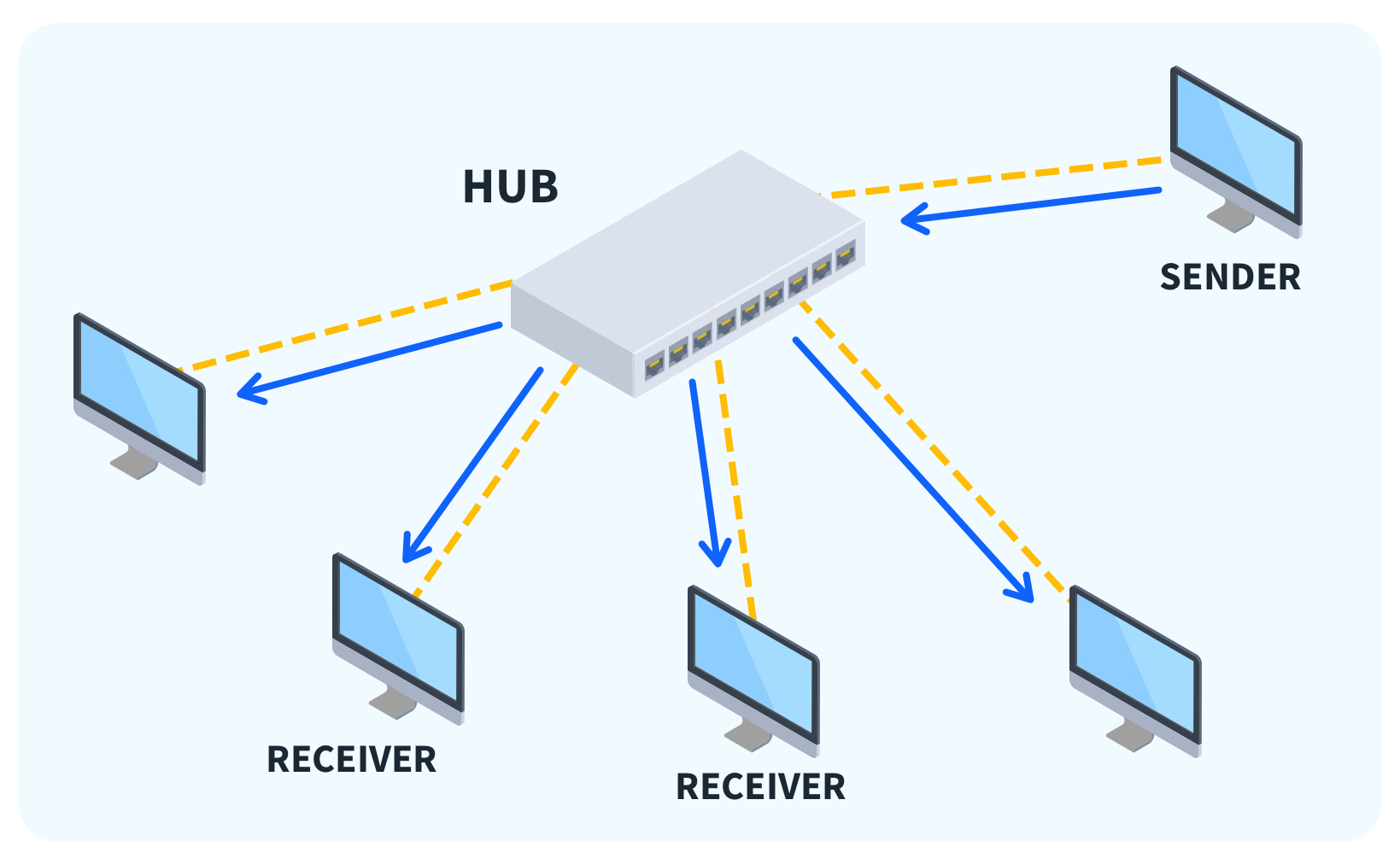
But here's the catch: unlike a smart switch, a hub isn't very discerning. When one computer sends data to the hub, the hub blindly broadcasts that data to every other device connected to it, regardless of whether they're the intended recipient. It's like shouting a secret across a crowded room, hoping the right person hears it while everyone else eavesdrops. This can lead to network congestion and potential security vulnerabilities (though modern networks often mitigate these risks).
So, why did (or do) people even use hubs? Historically, they were a cost-effective way to connect computers in smaller networks. They were simpler and cheaper to manufacture than switches. For basic home networks or small offices, a hub might have been sufficient. Think of it as the Model T Ford of networking it got the job done, even if it wasn't the fastest or fanciest option. As technology advanced, switches became more affordable and efficient, gradually replacing hubs in most applications.
While hubs might not be the star players they once were, understanding their function helps to appreciate the evolution of networking technology. They laid the groundwork for the sophisticated networks we rely on today. Next time you hear someone talking about old-school networking equipment, you can confidently chime in with your newfound hub knowledge!

The Inner Workings
2. A Deeper Dive
Let's peek under the hood and see how a hub manages the flow of information. Picture this: Computer A wants to send a message (data) to Computer B. Computer A transmits the data onto the network cable connected to the hub. The hub receives this electrical signal, amplifies it, and then transmits it out to all of its other ports. This is the broadcasting I mentioned earlier, the hub doesn't care about the destination, just gets the message out there. It's like yelling, I suppose!
Now, Computer B, C, D, and so on all receive this data. Each computer checks the destination address included within the data packet to see if it matches its own address. Only Computer B, the intended recipient, will actually process the data. The others will simply discard it. This process is rather inefficient compared to a switch, which directly sends the data only to the intended recipient. That is why switch are usually preferred these days.
The hub operates at the physical layer (Layer 1) of the OSI model, meaning it deals with raw electrical signals. It doesn't understand the structure or content of the data being transmitted. All it does is amplify and rebroadcast the signal. This simplicity is both its strength (it's easy to implement) and its weakness (it's prone to collisions and inefficiencies).
Because a hub blindly broadcasts data, it creates a single collision domain. This means that if two computers try to transmit data at the same time, their signals will collide, resulting in corrupted data. The computers then have to retransmit the data, further reducing network performance. Imagine two people trying to talk at the same time, chaos, right? Modern networks use switches to create separate collision domains for each connected device, greatly improving network performance and preventing these collisions.

Computer Networking Lecture 14 What Is Hub And How It Works
Hub vs. Switch
3. Choosing the Right Tool for the Job
So, hub versus switch? It's a common question! In many ways, it's like comparing a horse-drawn carriage to a modern automobile. Both can get you from point A to point B, but one is significantly more efficient and technologically advanced. As mentioned earlier, the key difference lies in how they handle data transmission.
A hub broadcasts data to all connected devices, creating a single collision domain. A switch, on the other hand, learns the MAC addresses (unique identifiers) of the devices connected to it. When a switch receives data, it examines the destination MAC address and forwards the data only to the port where that device is connected. This is called unicasting, targeted transmission. This creates separate collision domains for each connected device, drastically reducing the chance of collisions and improving network performance.
Think of it this way: a hub is like a party line telephone where everyone connected to the line hears every conversation. A switch is like a private phone system where each extension has its own dedicated line, allowing for simultaneous conversations without interference. Which would you prefer?
Because of their superior performance and security, switches have largely replaced hubs in modern networks. Hubs are still sometimes used in specialized situations, such as network monitoring, where it's necessary to capture all network traffic. However, for general networking purposes, a switch is almost always the better choice.
:max_bytes(150000):strip_icc()/149238278-56a1ad765f9b58b7d0c19fe8.jpg "What Is A Hub In Computer Network?")
What Is A Hub In Computer Network?
The Demise of the Hub
4. A Look Back at a Networking Pioneer
The networking landscape has evolved dramatically over the past few decades, and hubs have largely been relegated to the history books. While they played a crucial role in the early days of networking, their limitations ultimately led to their decline. So, where are they now? You won't find them in most modern homes or offices. Switches have completely taken over the market for general networking applications.
However, hubs aren't entirely extinct. You might still find them in some older or very specialized environments. For example, a network administrator might use a hub in a test environment to capture all network traffic for analysis. This is because a hub broadcasts all data, making it easy to monitor network activity. These setups are rare now.
Even though hubs are rarely used these days, they serve as a reminder of how far networking technology has come. They were a stepping stone on the path to faster, more efficient, and more secure networks. Understanding the function of a hub provides valuable context for understanding the intricacies of modern networking.
So, while you're unlikely to encounter a hub in your everyday life, knowing what it is and how it works is a valuable piece of networking knowledge. It's like knowing how a carburetor works in a modern fuel-injected car you might not need to know it, but it helps you appreciate the technology that you do use!
What Is Hub In Networking Chapter III Part IV
FAQ
5. Let's clarify some common queries about hubs.
Q: Are hubs still being manufactured?A: Not really. The demand for hubs has dwindled significantly due to the superiority of switches. Manufacturing has largely stopped, focusing instead on switches and other modern networking devices. If you find one, it's probably old!
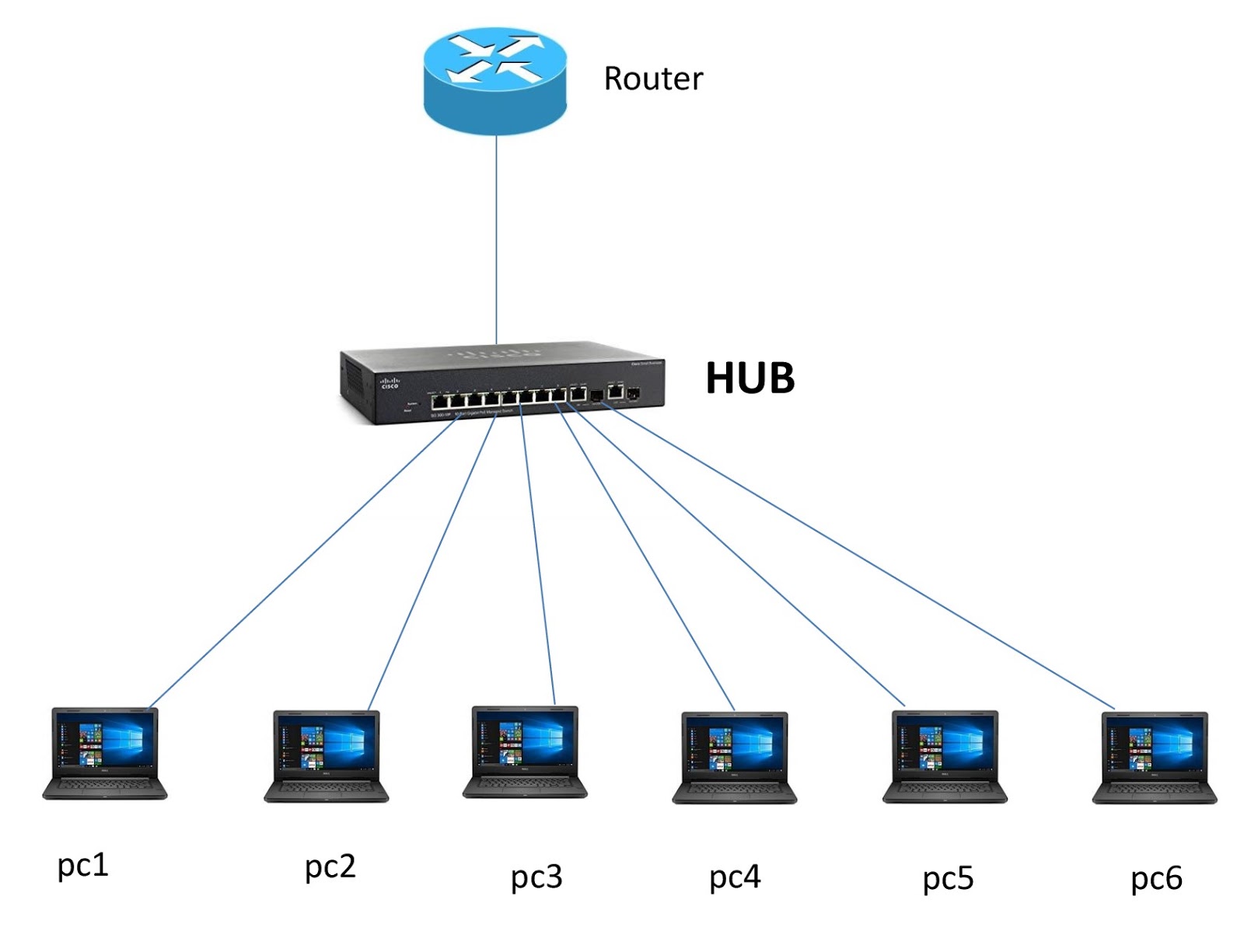
Q: Can I use a hub to connect my devices to the internet?A: Technically, yes, but it's not recommended. A hub needs to be connected to a router, which then connects to the internet. Using a hub will likely result in slower network speeds and increased security risks compared to using a switch directly connected to your router. In short, don't.
Q: Is a wireless router a hub?A: No, a wireless router is a more complex device than a hub. It combines the functions of a router, a switch, and a wireless access point. It handles routing data between networks, switching data between devices on the local network, and providing wireless connectivity.
Q: Why are switches better than hubs?A: Switches are better because they intelligently forward data only to the intended recipient, reducing network congestion and improving security. Hubs, on the other hand, broadcast data to all connected devices, leading to inefficiencies and potential security vulnerabilities.
